
Greek Salad
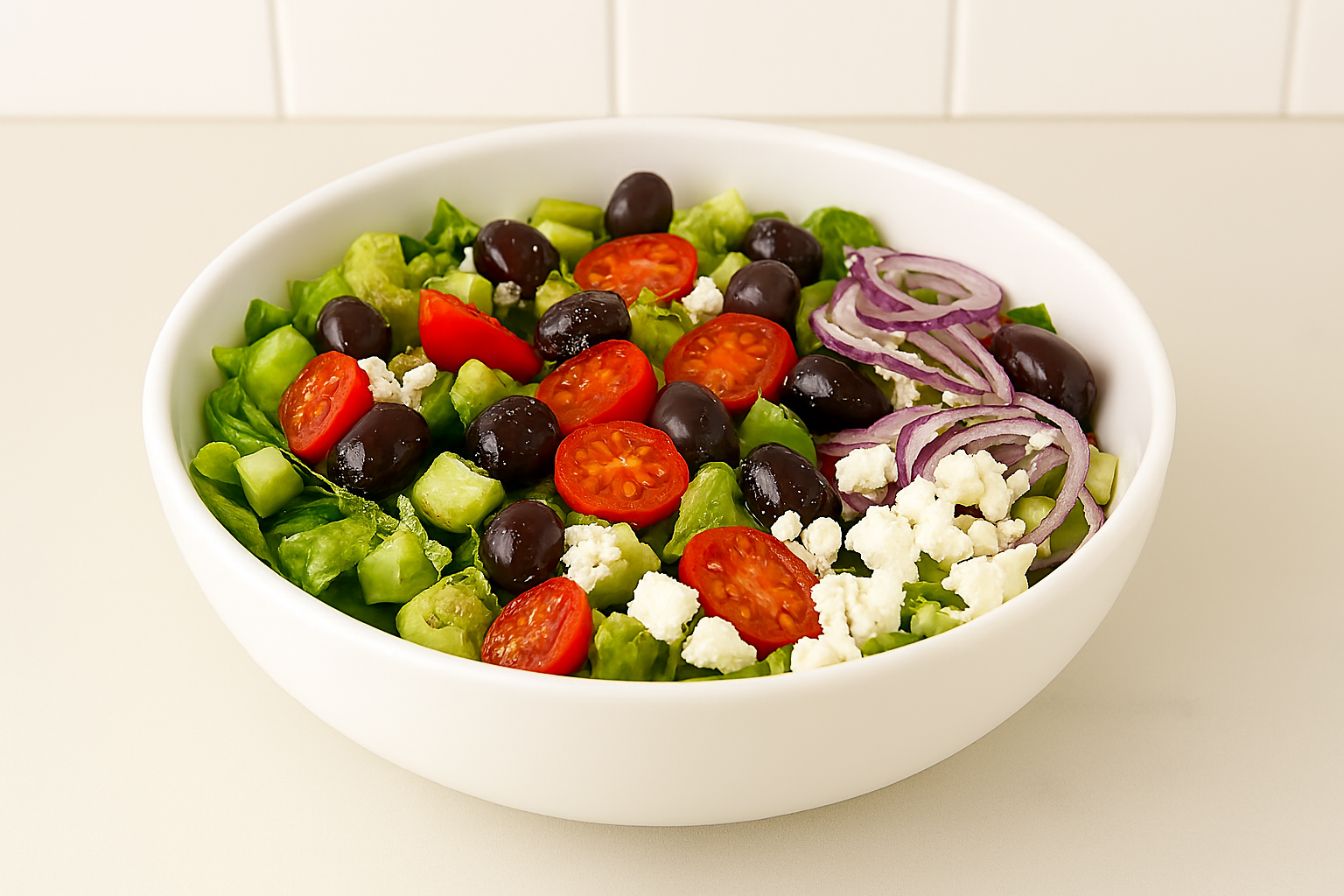
Fresh Mediterranean salad with cucumbers, tomatoes, olives, and feta cheese
Authentic Greek Salad Recipe (Horiatiki)
Greek salad, known as Horiatiki in Greece, is a refreshing Mediterranean salad featuring ripe tomatoes, crisp cucumbers, tangy feta cheese, and briny Kalamata olives dressed simply with olive oil and lemon. This recipe creates an authentic version of Greece's most famous salad - no lettuce required! Perfect as a light lunch or side dish for grilled meats and fish.
What Makes Authentic Greek Salad Different?
Traditional Greek salad contains no lettuce. Instead, it features large chunks of tomatoes and cucumbers as the base vegetables. The feta cheese sits on top in a large block or thick slices rather than being crumbled and mixed throughout. This presentation is key - the salad should be chunky and rustic, not finely chopped. Many American versions add lettuce, but authentic Horiatiki never does.
Choosing Your Tomatoes
Use the ripest, most flavorful tomatoes you can find. In summer, vine-ripened or heirloom tomatoes are perfect. Cherry or grape tomatoes work year-round as they're consistently sweet. The tomatoes should be so good you'd happily eat them plain. Pale, mealy tomatoes will make a bland salad no matter how good the other ingredients are.
The Importance of Good Olive Oil
Greek salad showcases olive oil, so use the best you have. Extra virgin olive oil with fruity, peppery notes makes a huge difference. Greek olive oil is traditional but any high-quality extra virgin works. The dressing is simply olive oil, lemon juice or red wine vinegar, oregano, and salt - each ingredient's quality shines through.
Feta Cheese Selection
Authentic Greek feta is made from sheep's milk or a sheep/goat milk blend, giving it tangy, rich flavor. Bulgarian feta is creamier, French feta is milder. Buy a block and cut it yourself rather than pre-crumbled - it has better texture and flavor. The feta should be thick and sit proudly on top of the salad.
Kalamata Olives
Kalamata olives from Greece are essential for authentic flavor. These purple-black olives are meaty, fruity, and slightly bitter. Use unpitted olives if possible - they have better flavor and texture than pre-pitted. If you can't find Kalamata, use another good-quality Mediterranean olive, but avoid canned black olives which have no flavor.
Serving Greek Salad
Serve Greek salad at room temperature, not straight from the refrigerator. Cold dulls flavors, while room temp lets the tomatoes, olive oil, and feta shine. This salad pairs perfectly with grilled lamb, chicken souvlaki, gyros, or any Mediterranean meal. Serve with warm pita bread to soak up the delicious juices at the bottom of the bowl.
Recommended Kitchen Equipment
Shop on AmazonRecommended kitchen tools for this recipe:
🛈 As an Amazon Associate, we earn from qualifying purchases at no extra cost to you.
Advertisement
Ingredients
- 1 head romaine lettuce, chopped
- 2 large cucumber, diced
- 2 cups cherry tomatoes, halved
- 1 small red onion, thinly sliced
- 1 cup Kalamata olives
- 200g feta cheese, crumbled
- 1/3 cup extra virgin olive oil
- 3 tbsp red wine vinegar
- 2 tbsp lemon juice
- 1 tsp dried oregano
- 1 clove garlic, minced
- to taste salt and pepper
Nutrition (Total)
Equipment Needed
- Large salad bowl
- Sharp knife
- Cutting board
- Small bowl for dressing
- Whisk
- Salad servers

Before You Start
- •Cut vegetables into large, rustic chunks
- •Use the ripest tomatoes you can find
- •Let salad sit at room temperature before serving
- •Reserve some feta and olives for garnish on top
Advertisement
Shop Fresh Ingredients
Shop on AmazonGet fresh ingredients delivered to your door:
🛈 As an Amazon Associate, we earn from qualifying purchases at no extra cost to you.
Instructions
Prepare vegetables
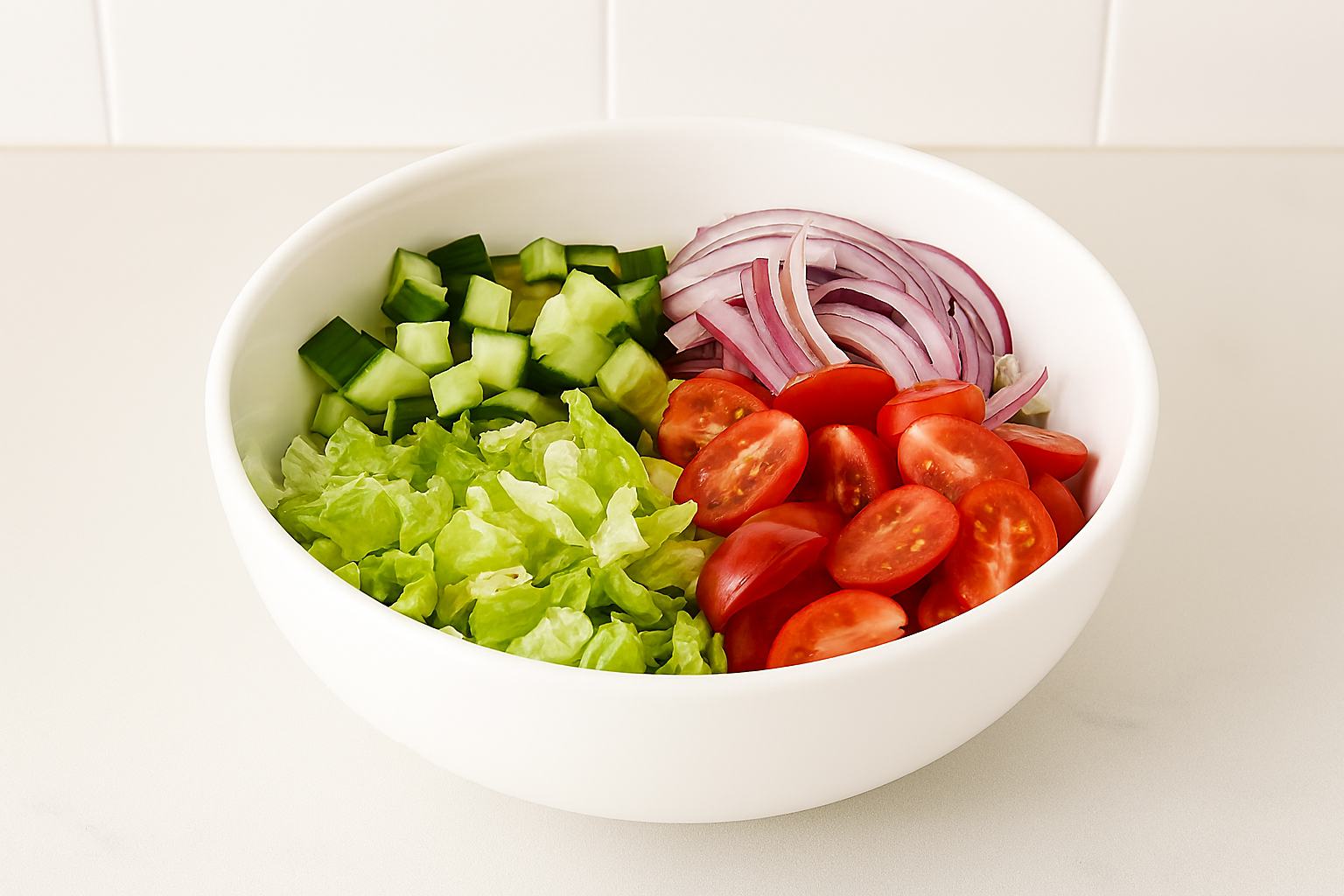
Chop lettuce, dice cucumbers, halve tomatoes, and thinly slice red onion. Place in a large bowl.
Make the dressing
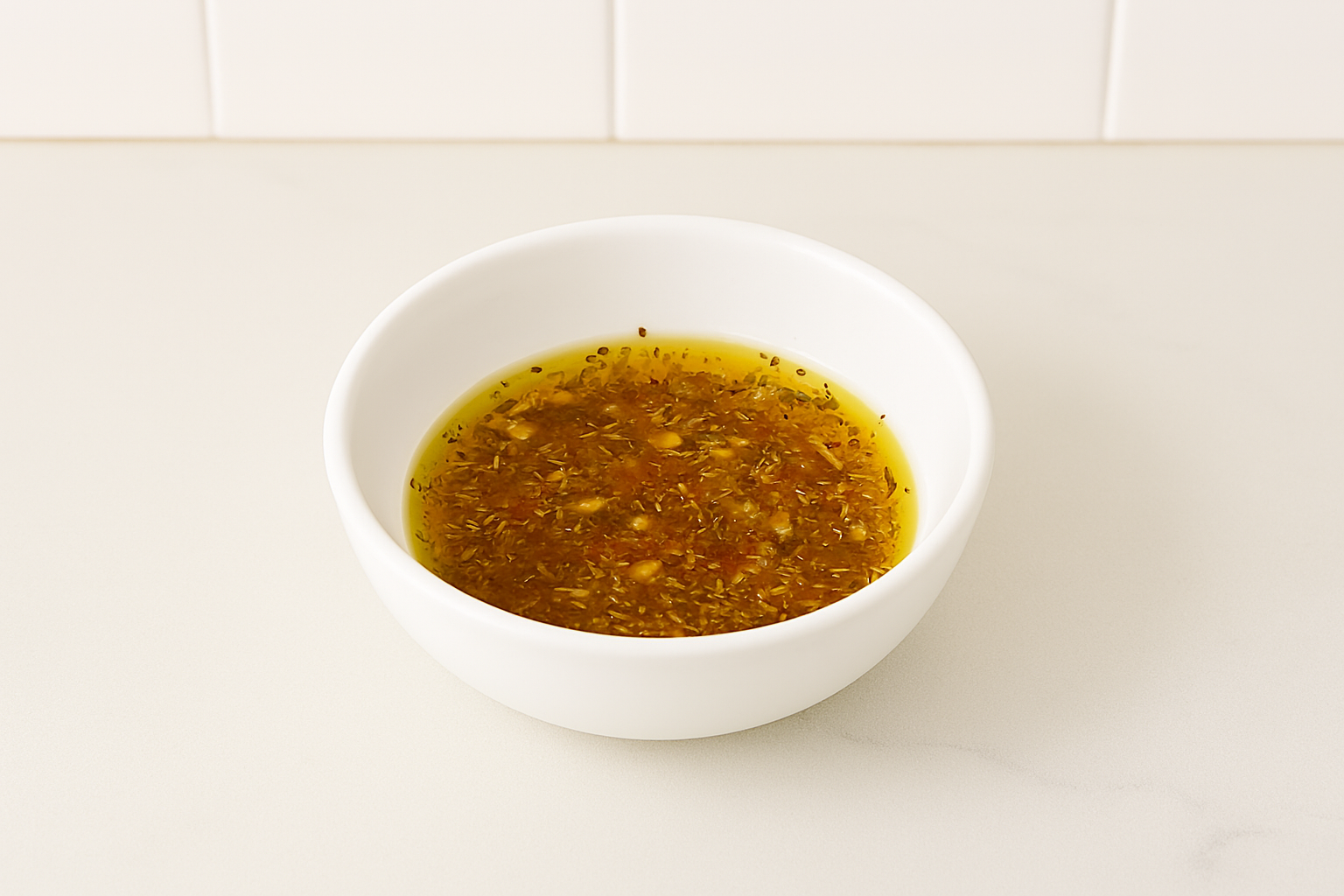
Whisk together olive oil, red wine vinegar, lemon juice, oregano, minced garlic, salt, and pepper in a small bowl.
Combine ingredients
Add olives to the vegetable bowl. Pour dressing over salad and toss gently to combine.
Add cheese
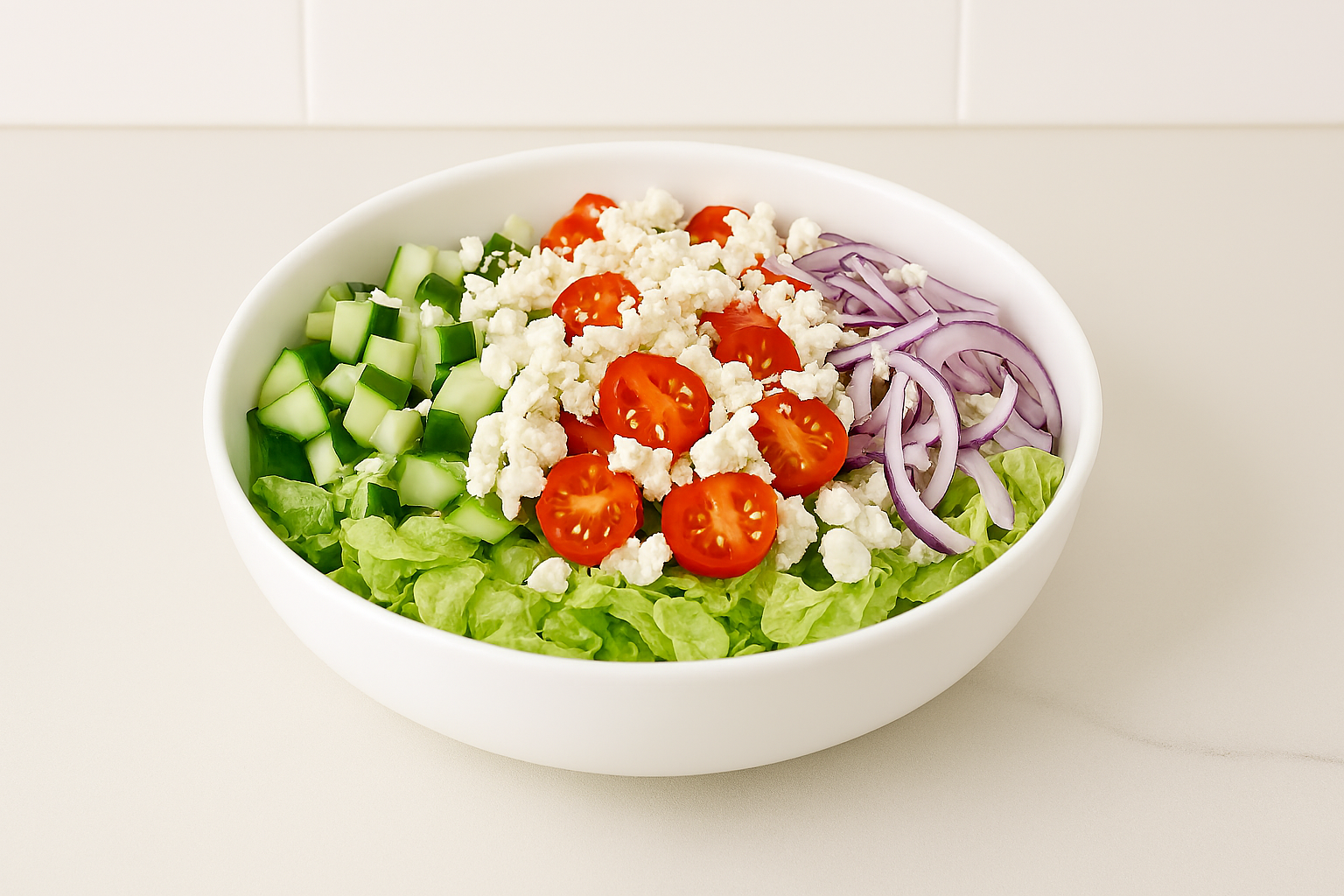
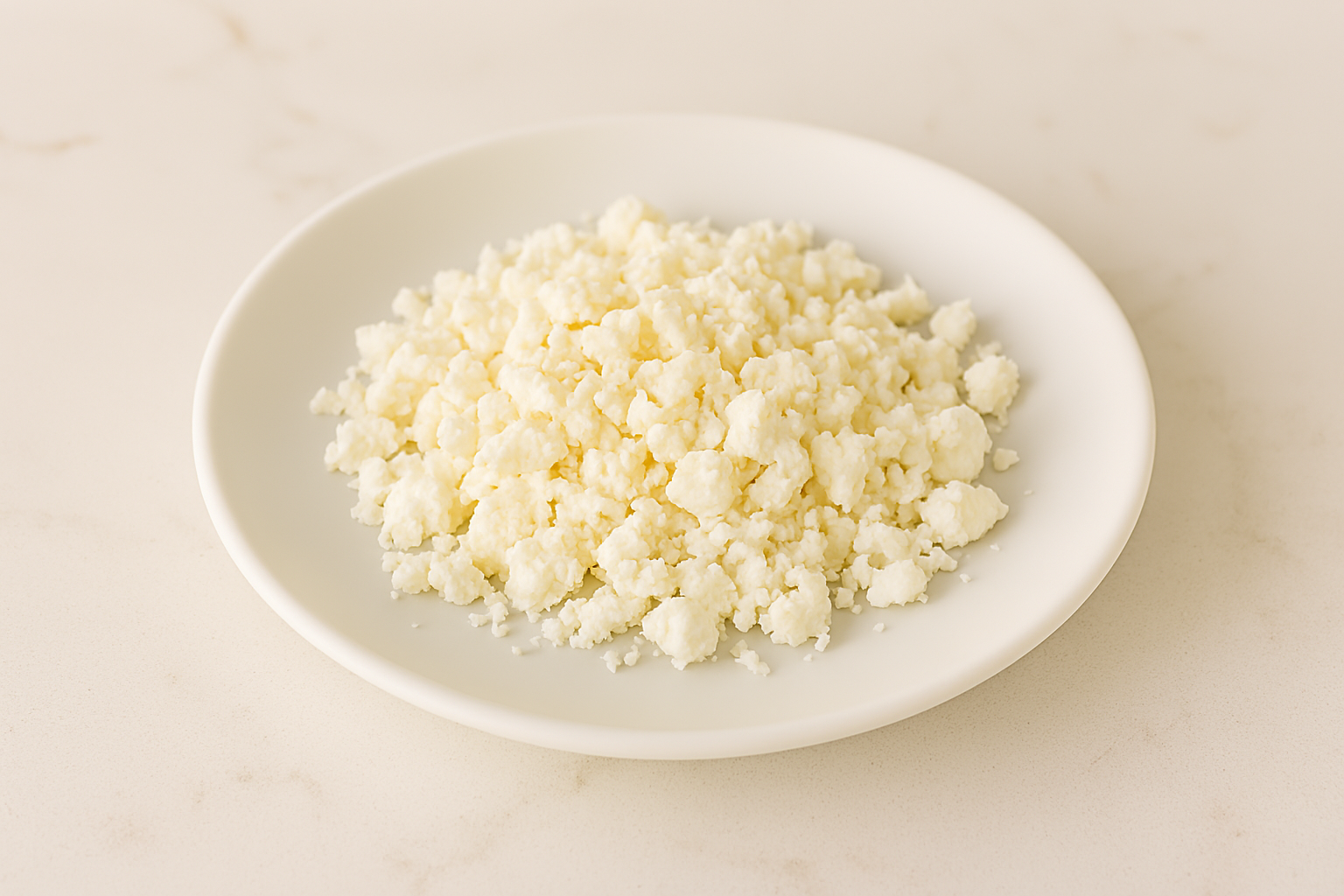
Top with crumbled feta cheese.
Serve
Serve immediately or chill for 15 minutes. Best enjoyed fresh. Toss again before serving.
Advertisement
Chef's Tips
- •Use the best quality olive oil you have.
- •Let salad sit for 10 minutes for flavors to meld.
- •Add grilled chicken or shrimp for a complete meal.
- •Store dressing separately if making ahead.
Frequently Asked Questions
Does authentic Greek salad have lettuce?
No! Traditional Greek salad (Horiatiki) never contains lettuce. It features tomatoes, cucumbers, onions, peppers, olives, and feta. Lettuce is an American addition. The vegetables themselves provide all the crunch and freshness needed.
Can I make Greek salad ahead of time?
Chop vegetables up to 4 hours ahead and store separately. Make dressing ahead and refrigerate. Assemble and dress the salad just before serving. Once dressed, vegetables release water and salad becomes watery if it sits too long.
What can I substitute for Kalamata olives?
Use other Mediterranean olives like Nicoise, Gaeta, or Cerignola. Avoid canned black olives - they lack flavor. If you really dislike olives, you can omit them, though they add authentic briny flavor that balances the sweet tomatoes.
Is Greek salad healthy?
Very healthy! Packed with fresh vegetables, heart-healthy olive oil, and protein from feta. It's naturally low-carb and gluten-free. The feta adds calcium and protein. It's a perfect example of the heart-healthy Mediterranean diet.
Can I use dried oregano?
Yes, dried oregano is actually traditional in Greek salad. Use about 1 teaspoon. Fresh oregano works too but has a different, more delicate flavor. Greek oregano is more pungent than Italian oregano.
Why is my Greek salad watery?
Tomatoes and cucumbers release water when salted. Make salad fresh and serve immediately. If making ahead, store vegetables undressed and dress just before serving. Some cooks salt cucumbers, let them drain 15 minutes, then pat dry before assembling.
What's the best cheese for Greek salad if I can't find feta?
Feta is really irreplaceable for authentic flavor. If unavailable, try queso fresco (milder) or ricotta salata (firmer). Goat cheese works in a pinch but has a different tang. Bulgarian feta or French feta are good alternatives to Greek feta.
Should I peel the cucumbers?
It's optional. English cucumbers have thin, mild skins that don't need peeling. Regular cucumbers have tougher, sometimes bitter skins - peel these. Greek cucumbers are left unpeeled for texture and nutrients.
Tags
Advertisement
Reviews (0)
Sign in to leave a review and rating!
You Might Also Like

Classic Spaghetti Carbonara
Authentic spaghetti carbonara recipe with creamy egg sauce, crispy pancetta, and Parmesan cheese (no cream).

Margherita Pizza
Classic Neapolitan pizza with fresh mozzarella, basil, and tomato sauce on a crispy crust

Chicken Tacos
Flavorful seasoned chicken tacos with fresh toppings and homemade salsa